
- Details
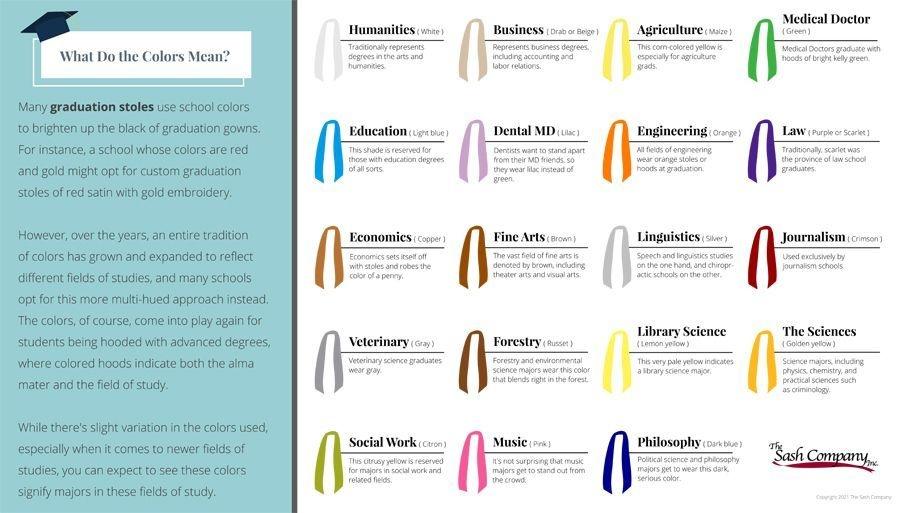
Deep, earthy, and rooted in tradition, russet is the designated academic regalia color for graduates in Forestry—a field devoted to managing and preserving forests, wildlife habitats, and natural resources. This warm, reddish-brown stole may not be the brightest on stage, but it carries powerful meaning: a commitment to conservation, environmental responsibility, and sustainable living.
For those who walk among the trees and advocate for the future of our planet, russet is worn with pride.
- Details
Refined and understated, gray is a powerful color in academic regalia—symbolizing veterinary science, and at some institutions, fields like criminal justice and library science. It represents a commitment to careful observation, rational thinking, and lifelong service—whether in the clinic, the courtroom, or the community.
The gray stole is a quiet yet confident symbol worn by graduates whose careers will impact both lives and systems.
- Details
Bold, deep, and unforgettable, crimson is the traditional academic color for Journalism. It symbolizes the commitment to truth, storytelling, and holding power to account—core principles that define the role of journalists in every society.
Whether you’ve studied print journalism, broadcast news, or digital media, wearing a crimson stole at graduation is a mark of your dedication to informing, educating, and empowering the public.
- Details
Hi Elegant, futuristic, and versatile, silver is a graduation stole color that reflects a dynamic blend of clarity, logic, and modern communication. Though not traditionally codified in older academic regalia charts, many institutions now use silver to represent programs in Speech, Communication, Media Studies, or even Interdisciplinary Sciences.
As the world becomes increasingly digital and interconnected, silver has emerged as the color of connection and progress.
- Details
Bold, energetic, and impossible to miss—orange is the traditional graduation stole color for students in the field of Engineering. From mechanical to aerospace, civil to software, those who wear the orange stole represent the minds that build, solve, and innovate.
This vibrant color honors not just years of technical training and academic rigor, but the essential role engineers play in shaping the modern world.
- Details
Earthy, timeless, and deeply symbolic, brown is the traditional graduation stole color for students graduating with degrees in the Fine Arts and Architecture. It may be subtler than some of the more vibrant academic colors, but brown carries with it a rich legacy of creativity, craftsmanship, and cultural influence.
From painters and sculptors to architects and designers, those who wear the brown stole represent the dreamers and builders who shape the world through form, space, and expression.
- Details
Among the more unique colors in academic regalia, copper stands out for its rich, metallic tone and deep significance. Traditionally worn by graduates in Economics, the copper stole honors a discipline built on logic, strategy, and the study of global systems.
Whether your path lies in finance, policy, analytics, or academic research, the copper stole signals a mind trained to understand value—both in theory and in practice.
- Details
Few fields carry as much weight and tradition as Law. To reflect that heritage, graduates in legal studies wear purple or scarlet stoles—bold, dignified colors that signify authority, justice, and centuries of scholarly discipline.
From future attorneys and judges to canon law scholars and public policy advocates, those who wear purple or scarlet stoles step into roles that uphold society’s moral and legal framework.
- Details
Soft, calm, and full of purpose, light blue is more than just a soothing color—it’s the official shade for graduates earning degrees in Education. Whether pursuing a career as a teacher, administrator, counselor, or curriculum developer, education majors wear light blue stoles to honor the calling of shaping minds and empowering the next generation.
This tradition isn’t just about ceremony. It’s about legacy.
- Details
Among the many colors worn during graduation, green holds a particularly powerful meaning. Traditionally associated with degrees in medicine, public health, and health sciences, the green stole symbolizes more than academic achievement—it represents healing, hope, and a lifelong commitment to caring for others.
Whether you're walking the stage as a nursing student, pre-med graduate, or future healthcare administrator, the green stole is a meaningful marker of the life-saving journey ahead.
- Details
Graceful, calming, and subtly powerful, lilac is the traditional color worn by graduates earning degrees in dentistry. This soft violet hue is more than just a beautiful accessory at graduation—it represents precision, care, and a lifelong dedication to oral health and patient well-being.
From dental hygienists to oral surgeons, those who wear the lilac stole are entering a field that blends science, artistry, and patient trust.
- Details
Bright, warm, and unmistakably symbolic of growth, maize is one of the most meaningful colors in academic regalia. Often worn by graduates in agriculture, natural resources, and life sciences, the maize stole is a vibrant tribute to the foundational role these fields play in sustaining the planet and feeding the world.
From environmental science to animal husbandry, horticulture to food production—students who don the maize stole are part of a long-standing tradition dedicated to stewardship, sustainability, and innovation in the natural world.
- Details
Among the many vibrant hues seen at commencement ceremonies, one color often flies under the radar: drab, also known as beige. But don't let its subtle tone fool you—this traditional color carries significant meaning and represents one of the most influential fields of study: Business.
From MBAs to marketing, accounting, finance, and entrepreneurship majors, students in business disciplines proudly wear drab stoles to signify their academic journey through one of the world’s most practical and impactful professions.